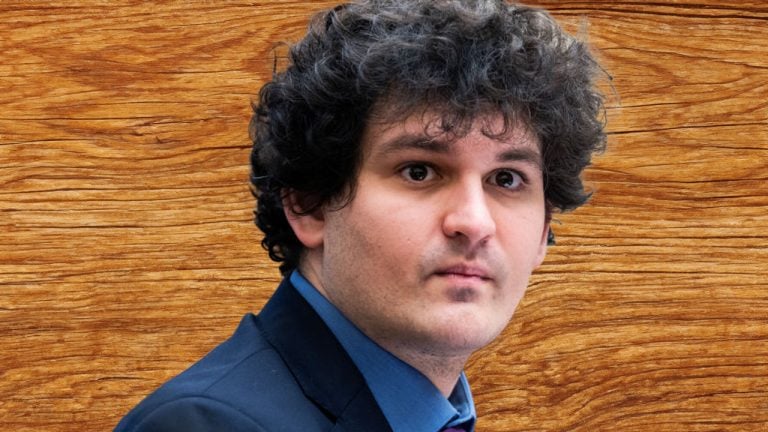
Bankman-Fried’s Lawyers Challenge Core of Fraud Case, Questioning Fiduciary Ties Under English Law

Bankman-Fried’s Lawyers Challenge Core of Fraud Case, Questioning Fiduciary Ties Under English Law

Lawyers for Sam Bankman-Fried are seeking to instruct the jury that no trust or fiduciary relationship existed between the crypto exchange and its customers, a key part of the prosecution’s fraud case.

Bankman-Fried’s Attorneys Question Trust Ties

In an addendum to earlier requests, Sam Bankman-Fried‘s attorneys argue that under English law, which governs FTX’s terms of service, no trust relationship arose between FTX and users. “The Terms of Service do not use the words ‘trust,’ ‘trust property,’ or ‘beneficial interest,'” the filing states. It adds that any language about fiduciary duties expressly disclaims such a relationship.

The defense aims to counter the government’s claim that Bankman-Fried “engaged in a scheme to defraud customers” by misappropriating deposits. Prosecutors allege FTX customer funds were improperly diverted to Bankman-Fried’s trading firm Alameda Research.

However, according to the defense, “subjective intentions are irrelevant” in determining if a trust exists under English law. They contend it is based solely on interpreting the contractual terms objectively. Representations outside the contract also cannot establish a trust relationship retroactively.

“Briefly stated, a formal trust, called an express trust in England, is the legal relationship created when assets are placed by someone under one party’s control for the benefit of another or for a special purpose,” Bankman-Fried’s lawyers contend. The attorneys noted:

The mere fact that a person subjectively expected, understood or believed that a trust, fiduciary relationship, or similar relationship existed does not create such a relationship.

The jury instructions follow Bankman-Fried’s recent day on the witness stand on Monday where he had a difficult time recollecting statements and specific decisions. The former FTX CEO faces more than 100 years in prison for the charges levied against him, and he has pleaded not guilty to all of the charges.

What do you think about the jury requests from Sam Bankman-Fried’s lawyers? Share your thoughts and opinions about this subject in the comments section below.


from Bitcoin News https://ift.tt/tZ41UVM

Comments

Popular posts from this blog

Ripple Donates $300K to Support Nepal and Tibet Flood Relief

Ripple is donating $300,000 to World Central Kitchen and Mercy Corps following devastating floods in Nepal and Tibet. The funding will support emergency meals, clean-water access, and sanitation efforts in affected communities. Ripple Directs $300K to Emergency Assistance A $300,000 Ripple donation will support emergency food, water, and sanitation assistance after destructive flooding struck Nepal […] from Bitcoin News https://ift.tt/b60CqSG

$13T Asset Manager Charles Schwab Adds 3 Altcoins to Its Crypto Push

There’s been a great deal of institutional interest in crypto assets over the last two years, and on Thursday, the $13 trillion asset manager Charles Schwab announced that it is expanding its digital asset listings beyond bitcoin and ethereum. According to the announcement, solana (SOL), avalanche (AVAX), and chainlink (LINK) accessibility will be added to […] from Bitcoin News https://ift.tt/b1dBkM5

Glassnode and Ark Invest Introduce ‘Cointime Economics’ — A New Model to Measure Bitcoin’s Value

Researchers from Glassnode and Ark Invest have collaborated to develop a new economic model for analyzing Bitcoin’s onchain metrics called “Cointime Economics.” The framework offers an alternative way to measure the economic activity and value of bitcoin based on “coinblocks” rather than the standard accounting method of unspent transaction outputs, or UTXOs. Cointime Economics: A Unique Framework for Analyzing Bitcoin The Cointime Economics white paper explains that coinblocks are the product of the number of bitcoin, or BTC , multiplied by the number of blocks they are held without moving. For instance, ten bitcoins held for ten blocks would equal 100 coinblocks. This method aims to capture the real economic weight and importance of each bitcoin based on the time it remains dormant. The longer a bitcoin is unmoved, the higher its cointime and implied economic significance. Cointime Economics introduces metrics such as coinblocks created, destroyed, and stored to describe Bitcoi...