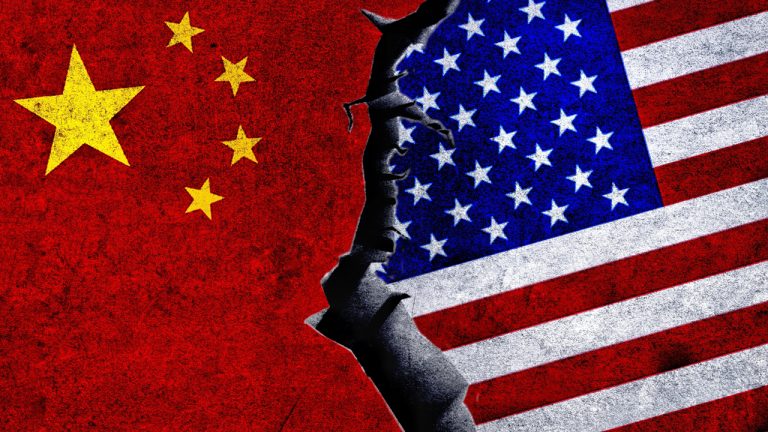
In a recent interview, the European Bank for Reconstruction and Development’s (EBRD) chief economist, Beata Javorcik, highlighted a notable trend: Russia’s growing inclination to transact in the Chinese yuan. This shift, the economist emphasized, could challenge the dominance of the U.S. dollar. “[The] increase in the usage of the Chinese currency is coming at the expense of the U.S. dollar,” Javorcik remarked on Wednesday.
EBRD Report, Chief Economist Beata Javorcik Emphasizes Russia’s Shift to Chinese Yuan
Beata Javorcik, the European Bank for Reconstruction and Development’s (EBRD) lead economist, touched on Russia’s increasing preference for the Chinese yuan in trade dealings. Her observations coincide with a period where the U.S. dollar’s stake in global reserves has slipped below 60%. Concurrently, Russia and numerous BRICS countries are veering away from leveraging the greenback in trade.
“You see that this increase in the usage of the Chinese currency is coming at the expense of the U.S. dollar,” Javorcik told Bloomberg on Wednesday. She further noted that sanctions have “given impetus to countries to think about diversifying invoicing currencies, and long-term this could erode the dominance of the dollar.”
Javorcik recently collaborated on a study highlighting the growing trend of countries adopting the Chinese yuan and forging swap lines and trade pacts with China’s central bank. China’s imports from Russia have recently skyrocketed, hitting a record peak. Speaking to Bloomberg, the economist mentioned that while new swap arrangements with the People’s Bank of China are emerging, many were in place before the conflict between Ukraine and Russia.
“Many of these swap lines, they predate the war,” Javorcik told the publication. “War has given impetus to using the Chinese yuan as a currency,” she added.
Javorcik’s perspective isn’t universally shared. Benn Steil, the economist and director of International Economics at the Council on Foreign Relations, opined in August that the Chinese currency is “not a serious threat to dollar hegemony.” However, in September, Alexander Wise, a strategic analyst at JPMorgan, highlighted potential threats to the U.S. dollar, outlining two specific scenarios in a company report.
Concurrently, Jahangir Aziz, an economist with JPMorgan, observed in the same study that the “importance of the dollar has declined significantly from 2014 to 2022.” In the report jointly penned by Javorcik and EBRD economist Maxim Chupilkin, they explain that while the greenback’s global dominance aids in imposing sanctions on Russia, it’s a double-edged sword.
“The dominance of the U.S. dollar makes international sanctions more effective, as firms engaged in international trade overwhelmingly require payments to be cleared through the U.S. banking system,” the authors wrote. “At the same time, the use of economic sanctions may over time reduce [the] attractiveness of the U.S. dollar as a vehicle currency and hence its dominance.”
What do you think about the EBRD economists’ opinions about the U.S. dollar becoming less attractive in trade? Share your thoughts and opinions about this subject in the comments section below.
from Bitcoin News https://ift.tt/uP9boyt
Comments
Post a Comment