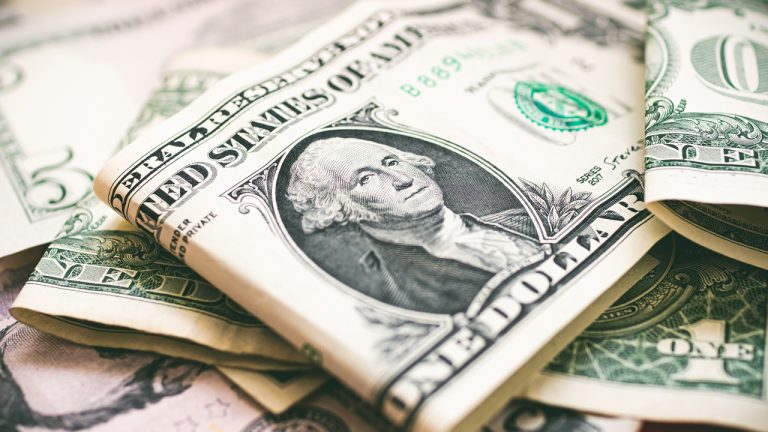
According to Cato Institute experts, full dollarization of the Argentine economy helps to protect “ordinary people’s purchasing power” from corrupt politicians and “often subservient—or simply incompetent—central bankers.” The experts said the loss of seigniorage should be seen as “an infinitesimal price to pay for the advantages of dollarization.”
Fighting Inflation With Dollarization
Argentina should consider dollarizing its economy because this “protects ordinary people’s purchasing power” from corrupt politicians and “often subservient—or simply incompetent—central bankers,” authors of the latest Cato Institute blog post. The authors, Daniel Raisbeck, a policy analyst and the research associate Gabriela Calderon de Burgos, argue that only full dollarization can help Argentina control inflation which currently hovers above 100%.
To support their argument, the two experts point to the inflation rates in South America’s three fully dollarized countries which are namely Panama, Ecuador, and El Salvador. According to the blog post, the dollarized trio, unlike many other countries from the region, “did not see double-digit inflation in the aftermath of the Covid‐19 pandemic.”
The call by the two authors adds to the growing list of experts and economists who endorse the full dollarization of the South American country’s economy. As previously reported by Bitcoin.com News, Javier Milei, a presidential candidate in Argentina’s upcoming elections, has also indicated his readiness to dollarize should he win.
Dollarization and the Loss of Monetary Autonomy
However, opponents of dollarization often cite the loss of monetary autonomy as one of the reasons why inflation-hit countries must avoid replacing their currencies with the greenback. Others have highlighted the United States’ alleged weaponization of the dollar as one example of why countries with collapsing currencies must reject dollarization.
Nevertheless, in their blog post, Raisbeck and Calderon de Burgos use Panama’s experiences since it dollarized in 1999 to push back against some of the arguments used by critics of dollarization. For instance, the authors argued that an analysis of Panama’s dollarization experiences by another Cato Institute expert Juan Luis Moreno‐Villalaz had shown that banks in the country were (and are still) able to allocate resources without major restrictions. Since dollarization, the banks were also able to adjust their liquidity in accordance with the local demand for credit or money, the authors added.
“[The] changes in the money supply—which arise from the interplay between local factors and the specific conditions of global credit markets— and not the Federal Reserve, determine Panama’s monetary policy. Fed policy affects Panama only to the same extent that it does the rest of the world,” Raisbeck and Calderon de Burgos concluded.
Concerning the loss of seigniorage — the profit earned by a government when it issues currency — the two said this must be seen as “an infinitesimal price to pay for the advantages of dollarization.” Similarly, the lack of large dollar reserves should not be an excuse for not dollarizing, the authors added.
What are your thoughts on this story? Let us know what you think in the comments section below.
from Bitcoin News https://ift.tt/KMbVZIE
Comments
Post a Comment