$20 Million Crypto Mining Farm to Be Built at Hydropower Plant in Kyrgyzstan

$20 Million Crypto Mining Farm to Be Built at Hydropower Plant in Kyrgyzstan

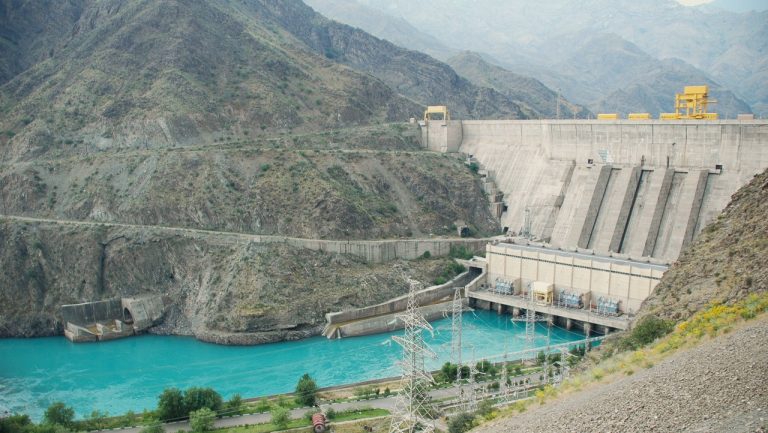
Kyrgyzstan intends to build a new facility for cryptocurrency mining at one of the country’s hydroelectric stations. The project aims to minimize the power plant’s electricity losses by utilizing its full generating capacity that currently exceeds that of the transmission network.

Kyrgyzstan to Power Crypto Mining Hardware With Surplus Green Energy

President of Kyrgyzstan, Sadyr Japarov, told local media this week he had approved the construction of a mining farm digital assets with a planned capacity of up to 30 MW at the site of the country’s Kambar-Ata hydroelectric power plant (HPP).

The building of the coin mining facility will require $20 million and the funds will be provided by an investor, Kyrgyzstan’s head of state added, speaking to the Kabar news agency. All processes will be automated and controlled by power engineers, Japarov noted.

The president also stated that the Kambar-Ata HPP has been in operation since 2010. It’s capable of producing 120 MW of electricity but only 90 MW can be currently used by consumers as the transfer is limited by the electric grid’s capacity.

As a result, in the past 13 years, the Central Asian nation has lost 6.816 billion kWh of electricity worth approximately 3.275 billion Kyrgyzstani som (over $37 million), Sadyr Japarov said. He emphasized that once it starts running, the crypto mining farm will eliminate these losses.

The region attracted numerous mining enterprises following China’s crackdown on the industry two years ago. In neighboring Kazakhstan, the influx of miners was blamed for the country’s growing power deficit and a law limiting their electricity consumption entered into force this year.

Kyrgyzstan has previously shut down illegal mining facilities and in late 2021 raised electricity rates for miners. In 2022, a dedicated law provided a legal definition for virtual assets, including cryptocurrencies, banned crypto payments, and introduced taxation for investment income and mining proceeds. The legislation also imposed a registration regime for mining businesses.

Do you expect Kyrgyzstan to expand its crypto mining operations in the future? Tell us in the comments section below.


from Bitcoin News https://ift.tt/hJTo0jn

Comments

Popular posts from this blog

Ripple Donates $300K to Support Nepal and Tibet Flood Relief

Ripple is donating $300,000 to World Central Kitchen and Mercy Corps following devastating floods in Nepal and Tibet. The funding will support emergency meals, clean-water access, and sanitation efforts in affected communities. Ripple Directs $300K to Emergency Assistance A $300,000 Ripple donation will support emergency food, water, and sanitation assistance after destructive flooding struck Nepal […] from Bitcoin News https://ift.tt/b60CqSG

$13T Asset Manager Charles Schwab Adds 3 Altcoins to Its Crypto Push

There’s been a great deal of institutional interest in crypto assets over the last two years, and on Thursday, the $13 trillion asset manager Charles Schwab announced that it is expanding its digital asset listings beyond bitcoin and ethereum. According to the announcement, solana (SOL), avalanche (AVAX), and chainlink (LINK) accessibility will be added to […] from Bitcoin News https://ift.tt/b1dBkM5

Glassnode and Ark Invest Introduce ‘Cointime Economics’ — A New Model to Measure Bitcoin’s Value

Researchers from Glassnode and Ark Invest have collaborated to develop a new economic model for analyzing Bitcoin’s onchain metrics called “Cointime Economics.” The framework offers an alternative way to measure the economic activity and value of bitcoin based on “coinblocks” rather than the standard accounting method of unspent transaction outputs, or UTXOs. Cointime Economics: A Unique Framework for Analyzing Bitcoin The Cointime Economics white paper explains that coinblocks are the product of the number of bitcoin, or BTC , multiplied by the number of blocks they are held without moving. For instance, ten bitcoins held for ten blocks would equal 100 coinblocks. This method aims to capture the real economic weight and importance of each bitcoin based on the time it remains dormant. The longer a bitcoin is unmoved, the higher its cointime and implied economic significance. Cointime Economics introduces metrics such as coinblocks created, destroyed, and stored to describe Bitcoi...