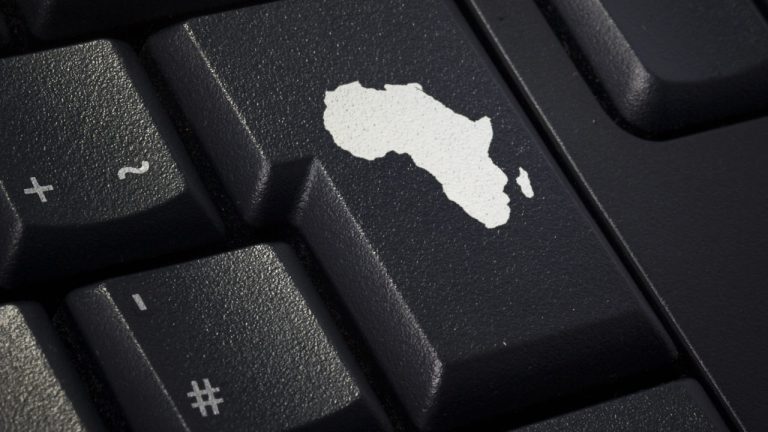
Kenyan President William Ruto Urges African Countries to Commence Process to Ditch the Dollar

Kenyan President William Ruto recently urged his counterparts on the African continent to kickstart the process of ditching the U.S. dollar and replacing it with a pan-African settlement system. Ruto said the Pan-African Payments and Settlement System (PAPSS) allows business people to focus on moving goods and services.

Pan-African Settlement System to Help African Countries Bypass U.S. Dollar

Kenyan President William Ruto has called on fellow African leaders to start taking steps aimed at replacing the U.S. dollar with an alternative payment solution known as the Pan-African Payments and Settlement System (PAPSS). According to Ruto, this alternative settlement system, which was launched in Jan. 2022, allows African countries to use their respective currencies when trading among themselves.

The Kenyan leader, who spoke at a forum of government and private sector officials, suggested that African countries can commence the process of ditching the dollar by encouraging central banks and commercial banks to join PAPSS.

As explained in an East African report, the alternative payment system, which is backed by central banks on the African continent, was developed by African Export-Import Bank (Afreximbank) and the African Continental Free Trade Area (AFCFTA) Secretariat.

Explaining why African countries must abandon the dollar, the Kenyan leader reportedly said:

We are all struggling to make payments for goods and services from one country to another because of differences in currencies. And in the middle of all these, we are all subjected to a dollar environment.

Ruto, however, suggested that when the settlement system is in play, business people’s only concern should be how to move goods and services. According to the Kenyan president, the “arduous task of currencies” will be left to Afreximbank, a pan-African multilateral trade finance institution.

Register your email here to get a weekly update on African news sent to your inbox:

What are your thoughts on this story? Let us know what you think in the comments section below.


from Bitcoin News https://ift.tt/S1jsCuF

Comments

Popular posts from this blog

Ripple Donates $300K to Support Nepal and Tibet Flood Relief

Ripple is donating $300,000 to World Central Kitchen and Mercy Corps following devastating floods in Nepal and Tibet. The funding will support emergency meals, clean-water access, and sanitation efforts in affected communities. Ripple Directs $300K to Emergency Assistance A $300,000 Ripple donation will support emergency food, water, and sanitation assistance after destructive flooding struck Nepal […] from Bitcoin News https://ift.tt/b60CqSG

$13T Asset Manager Charles Schwab Adds 3 Altcoins to Its Crypto Push

There’s been a great deal of institutional interest in crypto assets over the last two years, and on Thursday, the $13 trillion asset manager Charles Schwab announced that it is expanding its digital asset listings beyond bitcoin and ethereum. According to the announcement, solana (SOL), avalanche (AVAX), and chainlink (LINK) accessibility will be added to […] from Bitcoin News https://ift.tt/b1dBkM5

Glassnode and Ark Invest Introduce ‘Cointime Economics’ — A New Model to Measure Bitcoin’s Value

Researchers from Glassnode and Ark Invest have collaborated to develop a new economic model for analyzing Bitcoin’s onchain metrics called “Cointime Economics.” The framework offers an alternative way to measure the economic activity and value of bitcoin based on “coinblocks” rather than the standard accounting method of unspent transaction outputs, or UTXOs. Cointime Economics: A Unique Framework for Analyzing Bitcoin The Cointime Economics white paper explains that coinblocks are the product of the number of bitcoin, or BTC , multiplied by the number of blocks they are held without moving. For instance, ten bitcoins held for ten blocks would equal 100 coinblocks. This method aims to capture the real economic weight and importance of each bitcoin based on the time it remains dormant. The longer a bitcoin is unmoved, the higher its cointime and implied economic significance. Cointime Economics introduces metrics such as coinblocks created, destroyed, and stored to describe Bitcoi...