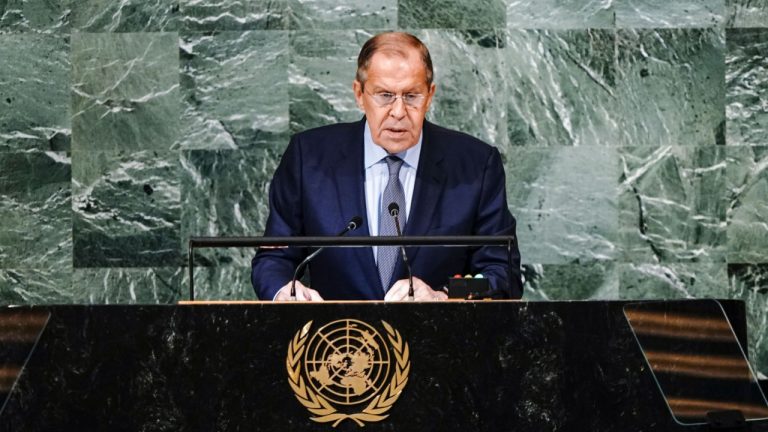
Russian Foreign Minister Sergey Lavrov has spoken on the current shift to national currencies and the de-dollarization international markets are currently experiencing. In a press conference after addressing the UN Security Council on April 25, Lavrov stated this shift could not be stopped, and that the future of traditional international institutions like the International Monetary Fund (IMF) was uncertain.
Russian FM Sergey Lavrov Thinks De-Dollarization ‘Can No Longer Be Stopped’
Russian Foreign Minister Sergey Lavrov referred to the current shift that international markets are taking away from the U.S. dollar in favor of national currencies. In a press conference after having addressed the UN Security Council, which he chaired, Lavrov stated that this movement to other currencies was unstoppable and that it would likely affect traditional finance institutions.
According to the Russian news Agency TASS, Lavrov declared:
The shift to settlements in national currencies bypassing the dollar, the euro, and the [yen], to digital currencies can no longer be stopped, and the future of the international currency financial system, including the International Monetary Fund (IMF), the World Bank, remains to be seen.
The Russian official had criticized the current role of the IMF before the UN Security Council, declaring it as a “tool” the U.S. and its allies used to achieve their goals, even military ones.
Putting the Blame on the U.S.
In the press conference, Lavrov assigned the responsibility behind this market shift to the U.S. government, which has enacted and recently extended one of the widest packages of sanctions in its history on the Russian Federation. On this, Lavrov explained:
The Americans have started the de-dollarization process. Already now this process is being analyzed particularly by American political analysts and economists with deep concern.
U.S. Treasury Secretary Janet Yellen recently assessed the possible effect that the enactment of U.S. sanctions could have over the dollar hegemony, recognizing these might have a detrimental effect on its usage. However, Yellen noted they tried to use these “extremely important” tools “judiciously.”
Former White House advisor Joseph Sullivan has also referred to the effect that the issuance of a BRICS bloc currency, which is currently being studied, would have on the supremacy of the U.S. dollar. Sullivan, who was economic an economic advisor during the Trump administration, stated that while the issuance of such a currency would not substitute the dollar overnight, it “would begin the slow erosion of its dominance.”
What do you think about Russian Foreign Minister Sergey Lavrov’s take on de-dollarization and its causes? Tell us in the comments section below.
from Bitcoin News https://ift.tt/q6CXRi5
Comments
Post a Comment