‘Evil Crypto’ Can Be Used in Foreign Trade, Russia’s Deputy Finance Minister Says

‘Evil Crypto’ Can Be Used in Foreign Trade, Russia’s Deputy Finance Minister Says

Cryptocurrency may be bad for investors but it can be useful in international settlements, according to a top government official in Moscow. Russian authorities intend to set up a special committee that would issue permits to operators employing crypto in foreign trade transactions, he indicated.

Russia Plans to ‘Experiment’ With Cross-Border Crypto Payments Amid Sanctions

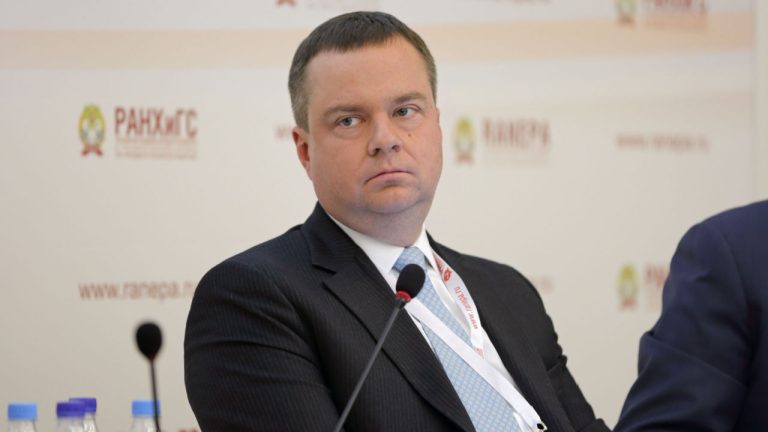
Crypto assets can be used in certain scenarios, Russia’s Deputy Finance Minister Alexey Moiseev commented during an economic forum in Moscow. Speaking at the “Banks. Transformation. Economy. 2.0” conference, he was quoted by the RIA Novosti news agency as saying:

Of course, crypto is generally evil. I believe that people who invest their savings there take a very big risk … But there may be individual situations in which crypto can be used.

Moiseev made it clear he was referring to Russian foreign trade activities, which are currently restricted by Western sanctions. He also reminded that a draft law designed to regulate this matter is still under consideration in the State Duma, the lower house of Russian parliament.

“We’ll experiment … If the bill is adopted, a certain committee will be formed, including representatives of a number of ministries, the Bank of Russia and law enforcement agencies, which will give permission to individual operators to use cryptocurrency in foreign trade transactions,” the high-ranking representative of the executive power elaborated.

Alexey Moiseev suggested that the legislative process necessary to provide the legal basis for the trials will likely be delayed until the end of the year. Government officials and lawmakers have been debating various aspects of Russia’s regulatory approach toward cryptocurrencies for quite some time.

Differences between the Russian Ministry of Finance, with its more liberal views on the issue, and the Central Bank of Russia, which maintains a rather conservative stance on crypto regulations, impeded progress for months.

Since sanctions pressure on Russia increased following its invasion of Ukraine, however, they agreed “it is impossible to do without cross-border settlements in cryptocurrency,” as Moiseev revealed in September, last year.

At the same time, most state institutions are now against legalizing transactions with decentralized cryptocurrencies like bitcoin in Russia, except for the purpose of facilitating international payments under special legal regimes that are yet to be established.

Do you think Russia will try to bypass financial restrictions by using cryptocurrencies in cross-border payments? Share your thoughts on the subject in the comments section below.


from Bitcoin News https://ift.tt/1hTz5Jf

Comments

Popular posts from this blog

Bitcoin ETFs Snap 10-Day Streak: $93M Flees as Fidelity’s FBTC Takes the Hit

Data compiled Friday revealed a striking reversal for spot bitcoin exchange-traded funds, which snapped a ten-session inflow streak with a $93.16 million exodus—marking their first day of negative movement. Bitcoin ETFs Drain While Ether ETFs Gain The abrupt shift punctuated a previously unbroken stretch of positive momentum for U.S. bitcoin ETFs, culminating in a $93.16 […] from Bitcoin News https://ift.tt/Q1xgKWA

Richard Teng Takes Charge as Binance CEO Following Changpeng Zhao’s Exit

After Changpeng Zhao’s exit, Richard Teng has stepped in as the new chief executive officer of Binance, the globe’s largest crypto exchange in terms of trading volume. On Tuesday, Teng made his introduction to the public through social media platform X, assuring that under his stewardship, Binance will “continue to meet and exceed the expectations of stakeholders.” Richard Teng Assumes Binance’s Top Role, Succeeding CZ This week marked a significant event for crypto enthusiasts as they observed one of the largest settlements in the industry’s history. The settlement involved Binance and the U.S. Department of Justice, with Binance incurring fines totaling approximately $4.3 billion. Following this development, the exchange’s CEO, Changpeng Zhao — popularly known as “CZ” — resigned. Post-settlement, on Tuesday, CZ announced via Twitter that Binance’s ex-Global Head of Regional Markets, Richard Teng, has been appointed as the new CEO. Teng brings an extensive history in the financ...

Glassnode and Ark Invest Introduce ‘Cointime Economics’ — A New Model to Measure Bitcoin’s Value

Researchers from Glassnode and Ark Invest have collaborated to develop a new economic model for analyzing Bitcoin’s onchain metrics called “Cointime Economics.” The framework offers an alternative way to measure the economic activity and value of bitcoin based on “coinblocks” rather than the standard accounting method of unspent transaction outputs, or UTXOs. Cointime Economics: A Unique Framework for Analyzing Bitcoin The Cointime Economics white paper explains that coinblocks are the product of the number of bitcoin, or BTC , multiplied by the number of blocks they are held without moving. For instance, ten bitcoins held for ten blocks would equal 100 coinblocks. This method aims to capture the real economic weight and importance of each bitcoin based on the time it remains dormant. The longer a bitcoin is unmoved, the higher its cointime and implied economic significance. Cointime Economics introduces metrics such as coinblocks created, destroyed, and stored to describe Bitcoi...