While Biden and Trump Blame Each Other for Bank Failures, Others Believe the Cause Might Be a Management Issue
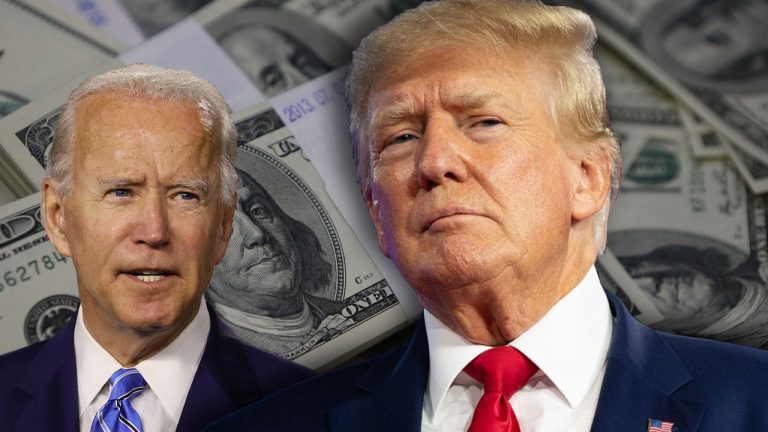
The recent banking failures involving the fall of Silicon Valley Bank (SVB), Signature Bank, and Silvergate Bank, have high-profile government individuals trying to find a culprit. U.S. President Joe Biden and former President Donald Trump have publicly blamed each other’s policies for the outcome, but according to some analysts, the problem might be ignorance in the banking system.
Biden and Trump Scuffle on Bank Failures’ Causes
The recent banking crisis that the U.S. is currently facing after the fall of three medium-size banks (Silicon Valley Bank, Signature Bank, and Silvergate Bank), has spurred a political discussion between U.S. President Joe Biden and former President Donald Trump in order to find the responsible of the biggest bank failures since the 2008 subprime mortgage crisis.
Biden and Trump have been very vocal assigning the blame to each the other’s policies. On March 13, in the wake of the fall of Silicon Valley Bank, Biden reassured people about the isolated character of the incident, calling on Americans to trust in the banking system, and saying it was safe.
At the same time, President Biden assigned the blame for the bank failures on the deregulation advances that occurred under Trump’s administration, in which the stricter banking regulations established via the Dodd-Frank Act during former President Obama’s mandate were struck down. Biden stated:
Unfortunately, the last administration rolled back regulations.
Trump was quick to rebuff these allegations, making it clear he considers the current administration responsible for the current shaky standing of the banking system. As part of a speech given on March 28, Trump stated:
We are seeing bank failures left and right. Biden and his enablers and Congress are directly responsible for creating this economic catastrophe. And with Joe Biden at the wheel, it will only get worse. That’s what’s happening in almost every single sector.
A Different Answer
However, for some analysts, the blame lies in problems that could have easily been handled by assessing the risk of, for example, Silicon Valley Bank. This is the opinion of Andre Esteves, the millionaire CEO and founder of BTG Pactual, one of the biggest investment banks in Latam, managing over $70 billion in assets.
For Esteves, it was the lack of expertise of banking operators resulting from years of low-interest rates which caused the debacle at Silicon Valley Bank. Esteves explained that the current generation of operators only knows inflation and hawkish policies by book, or in theory, and doesn’t know how to deal with them in practice.
Esteves declared:
It’s very basic asset liability management that any junior analyst working at a bank in Chile, Brazil or Colombia or any other country that presents a little more volatility would know.
Esteves also singled out Credit Suisse’s fall as an isolated event that had been gestating for years.
What do you think about the responsibilities of Biden, Trump, and banking operators for the current banking crisis? Tell us in the comment section below.
from Bitcoin News https://ift.tt/D65ezpV
Comments
Post a Comment